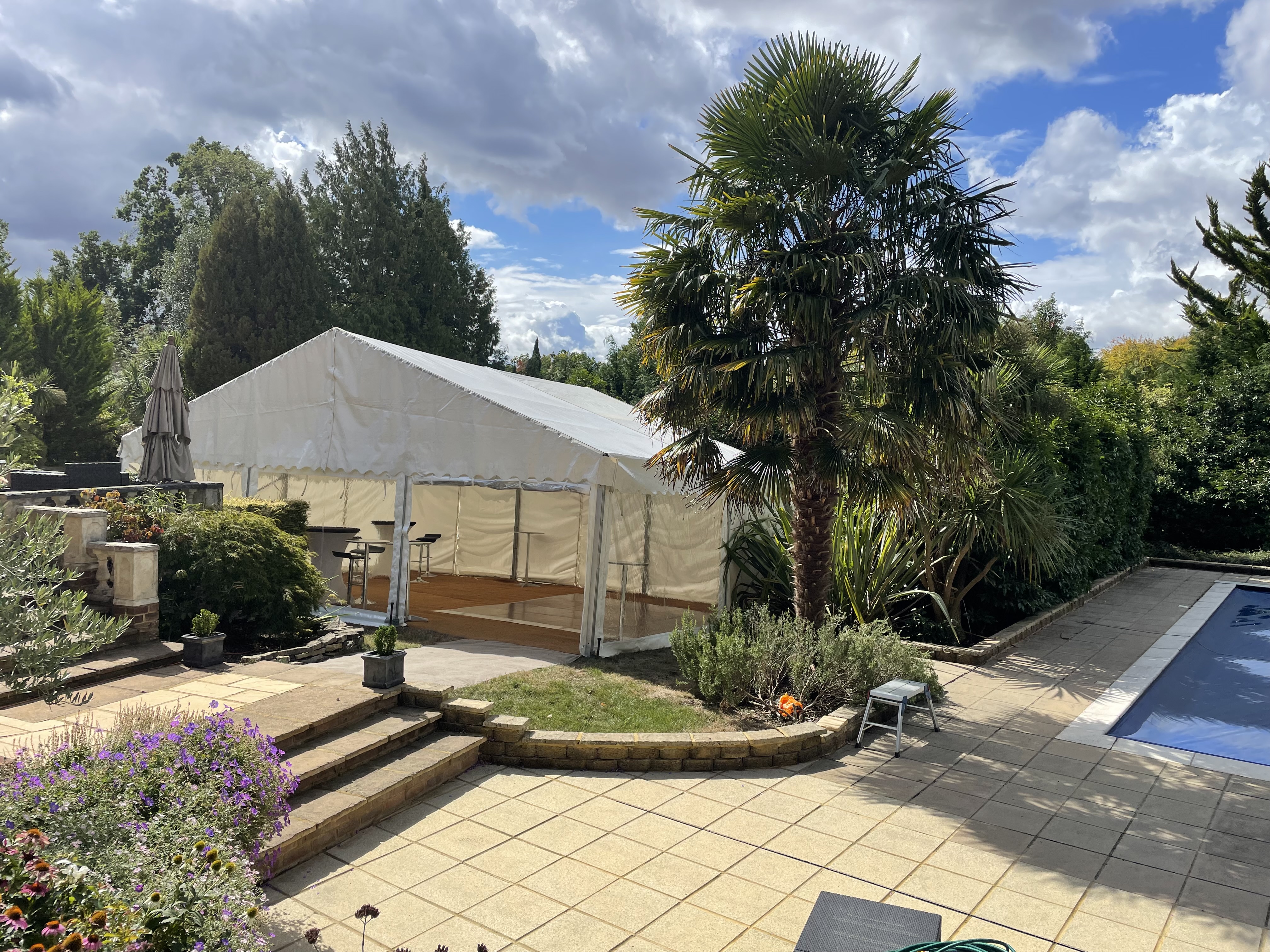
The Ultimate Checklist For Hosting A Garden Party Marquee In Berkshire|Hampshire
Introduction
There is something uniquely special about hosting a celebration at home. Whether it’s a milestone 50th birthday, an intimate engagement party, or a sophisticated summer soirée, your garden offers a level of sentimental value and creative freedom that no hotel ballroom can match.
However, moving the party from the patio to a marquee involves more than just "putting up a tent." From navigating the unpredictable British weather to ensuring your flowerbeds aren’t trampled, successful planning lies in the details. As we look ahead to the 2026 event season, we’ve compiled the essential checklist to ensure your garden marquee event is as seamless as it is spectacular.
Section 1: Site Assessment & Measurement (The Logistics) For A Marquee
Before you fall in love with a specific interior style, you need to know what your "canvas" can actually accommodate. A common mistake is measuring only the flat area of your lawn, but a marquee requires a bit more breathing room than its physical dimensions suggest.
- The "Safety Buffer": For a standard clear-span marquee, you should ideally allow for a small perimeter around the entire structure. This space is vital for our crew to secure the legs, tension the PVC walls, and—most importantly—ensure the any guy ropes or weights don’t become a trip hazard for your guests.
- Understanding the Terrain: Our modern marquee systems are incredibly versatile. While a flat, lush lawn is the "gold standard," we can also build over:
- Gravel and Patios: Using weighted bolt-down systems if we can't use stakes.
- Uneven Slopes: If your garden has a significant dip, don’t panic. We can install steel sub-frame flooring to create a perfectly level "floating" platform, though this is a premium feature that should be factored into your 2026 budget.
- Checking the "Invisible" Obstacles:
- Pro Tip for 2026: We always recommend a physical site visit at least six months in advance. This allows us to see your garden in a similar season to your event, checking for potential drainage issues or soft spots that might require specific flooring solutions.
Section 2: Power & Utilities – Keeping the Lights (and Music) On In Your Marquee
One of the most overlooked aspects of a garden marquee is where the electricity actually comes from. In 2026, with high-spec sound systems, professional catering ovens, and elaborate LED lighting displays becoming the standard, a single extension lead from your kitchen window simply won't cut it.
1. Calculating Your "Power Load"
To avoid a total blackout mid-party, you need to tally up the wattage of everything running simultaneously. A typical garden event requires power for:
- Catering: This is usually the biggest drain. Commercial ovens, hot cupboards, and coffee machines pull significant "amps."
- Entertainment: Professional DJs and bands require stable power to prevent "clipping" or damage to their equipment.
- Climate Control: If you’re using thermostatically controlled heaters, they require a constant feed to keep the space at a steady 21°C.
- Lighting: While modern LED uplighting is energy-efficient, large-scale "Edison" bulb installations and festoon runs across the garden add up.
2. Mains Supply vs. Generator: Which is Right for You?
- The House Mains: If your marquee is small (e.g., for 30–40 guests) and situated close to the house, we can often "tap into" your domestic supply. However, this carries the risk of tripping your home’s circuit breakers if the caterer turns on the deep fryer while the band is performing their soundcheck.
- Super-Silent Generators: For larger events or weddings, we almost always recommend a dedicated generator.
- The Benefit: It keeps the event entirely independent of your home’s infrastructure.
- The 2026 Standard: We only use "super-silent" units which sit discreetly behind a hedge or screen, ensuring the only thing your guests hear is the music.
- 3. Cabling and Safety
- Power cables should never be a "trip hazard." In our garden setups, we can use heavy-duty rubber cable ramps (often called "yellow jackets") to protect wires where they cross paths or walkways. We also recommend a Power Distribution Board (MDU) inside the marquee, which acts as a central hub, giving your DJ, caterer, and bar staff their own dedicated sockets.